The project is a house for Lucy and Nick on land belonging to Lucy’s family farm at the edge of the High Weald.
The brief began with a wish to return to the farm and live closely with the landscape they already know. Nick uses a wheelchair, so the house needed to offer independence and ease of movement without allowing accessibility to become its defining architectural expression.
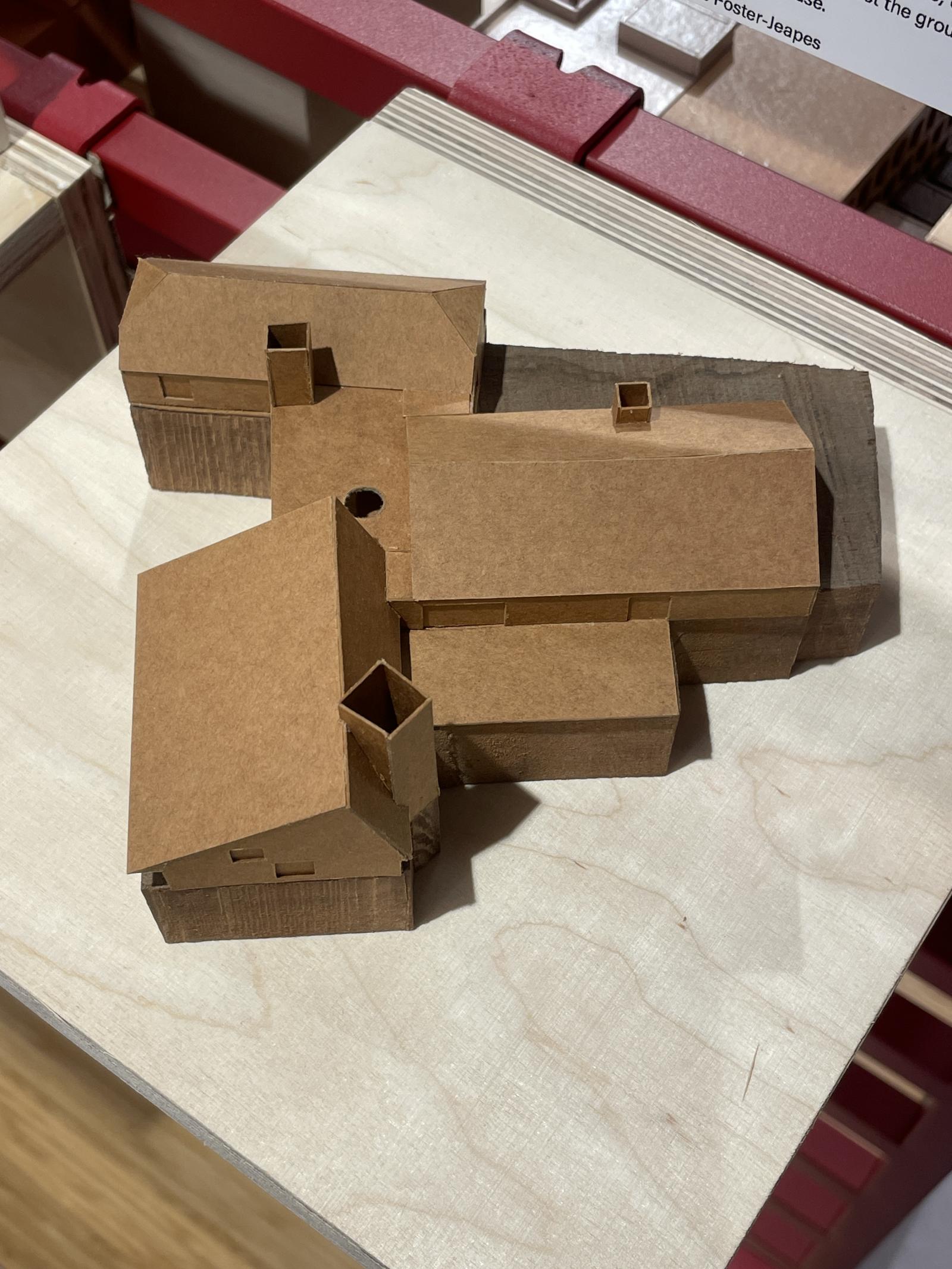
We became interested in the ordinary farmsteads of the High Weald: buildings accumulated over time, loosely gathered around yards, made from direct materials and sitting without ceremony in the landscape. The proposal develops from these observations. A small group of pitched buildings gathers around a courtyard at the edge of an existing wood. House, garden, orchard, meadow and woodland are conceived together, making a place for long-term family life and stewardship of the land.
Models are when a project stops pretending to be a drawing.
We have used them to look at this house at three very different distances. At 1:500, the building is almost incidental. The model is really of the field: its fall, woodland edge, hedges and the small piece of ground the house occupies. It helped us decide where not to build as much as where to build.
At 1:200, the landscape falls away and the buildings become objects. Solid pieces of timber could be moved, cut down, separated and brought together. This was useful because the project depends less on a single form than on the slightly awkward relationship between several of them. The model tested when that collection began to feel like a farmstead rather than a house trying to look like one.
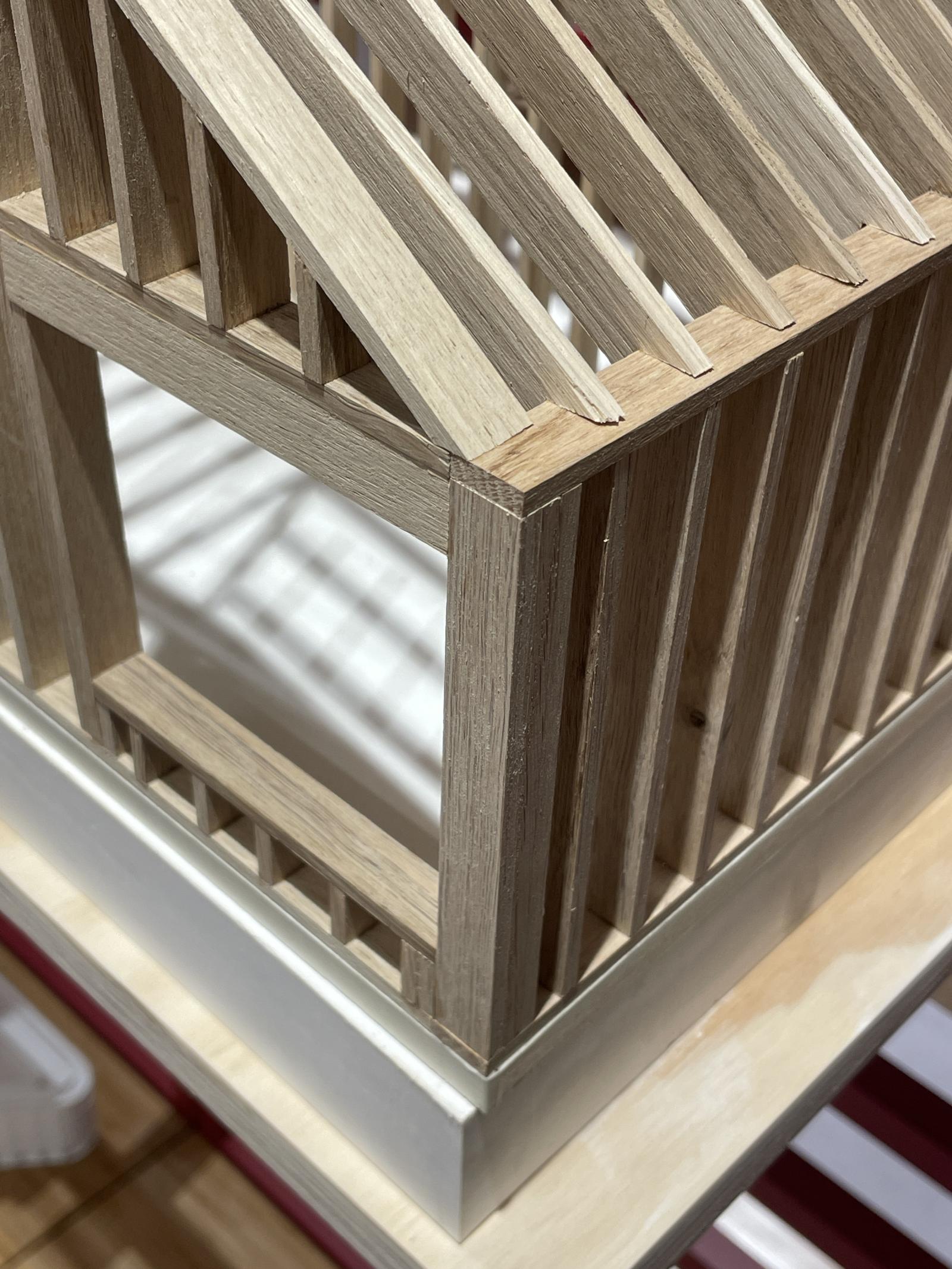
The 1:20 model moves in again. It is a fragment rather than a miniature building: timber, plaster, structure, thickness and junction. At this scale the question becomes how the architecture is actually made, and whether the character we have drawn survives construction.
None of the models was made to confirm a finished idea. Each one made the project less certain for a while, which was useful. The shift in scale repeatedly exposed something the previous model had allowed us to ignore.
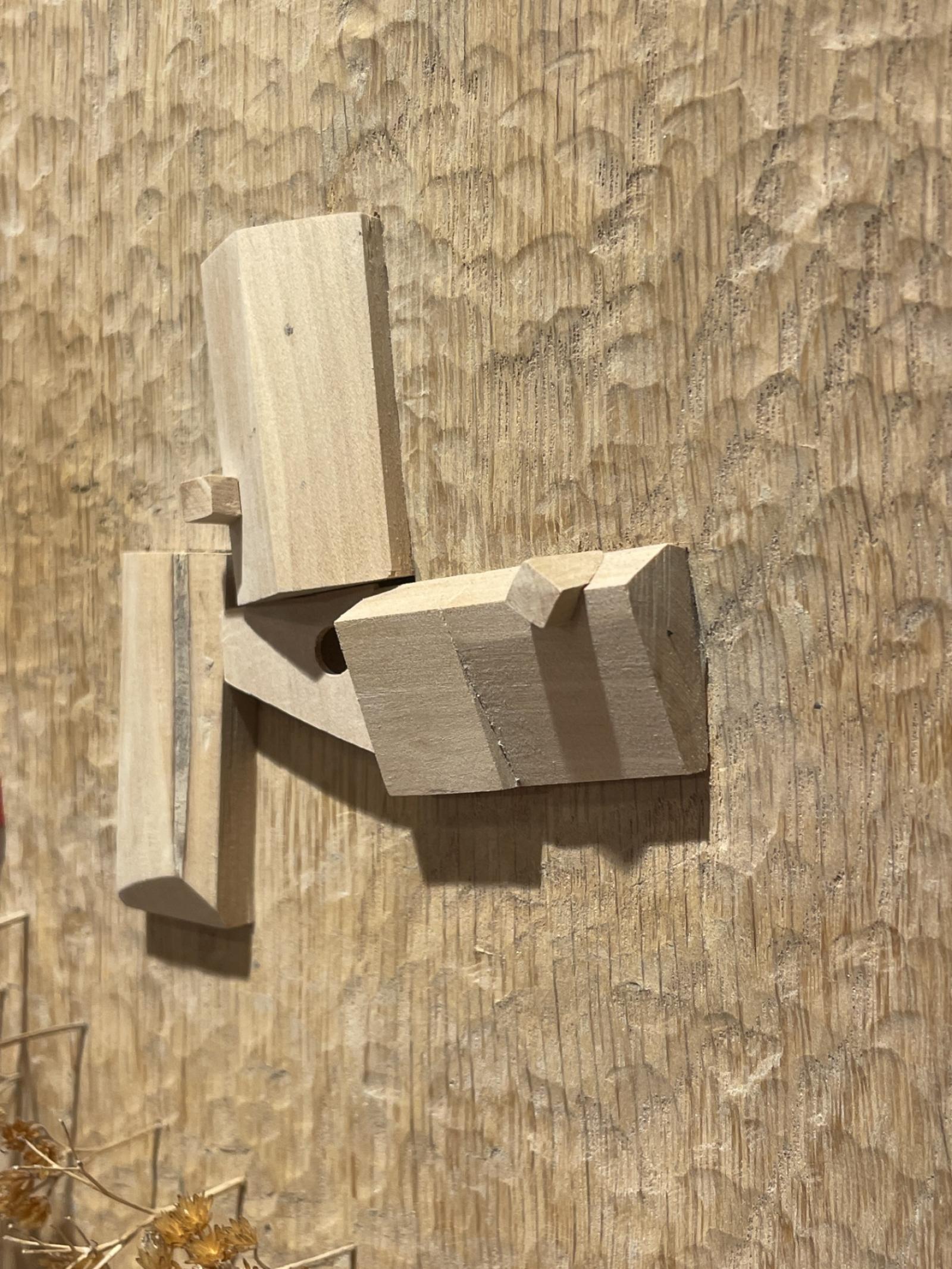
They are also partly made of bits of the site. Which we like. And helps us feel it out, somewhat.